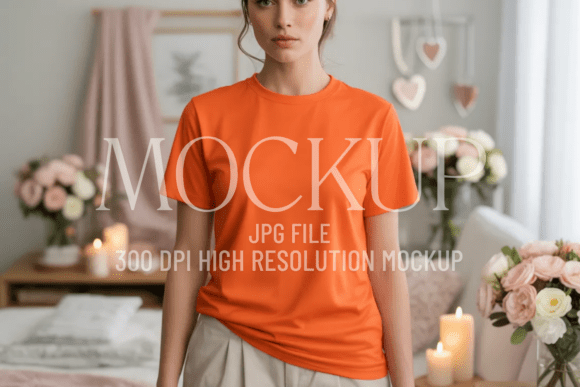
Comfort Colors 1717 T-Shirt Mockup: A Realistic, Workflow-Optimized Tool for Visualizing Apparel Designs
When presenting apparel designs—whether for client pitches, e-commerce listings, or social media previews—the difference between a flat digital file and a lifelike product visualization can directly influence perception, trust, and conversion. The Comfort Colors 1717 T-shirt Mockup bridges that gap with intentionality: it’s not merely a static image, but a purpose-built visual asset engineered for fidelity, flexibility, and speed. Unlike generic t-shirt templates, this mockup mirrors the distinctive drape, fabric texture, and relaxed silhouette of the actual Comfort Colors 1717 unisex crewneck—a garment known for its 6.1-ounce, 100% cotton construction, double-needle stitching, and vintage-inspired softness. That specificity matters: when your mockup reflects real-world garment behavior, your design presentation gains authenticity.
How Realism Is Built Into the Comfort Colors 1717 T-Shirt Mockup
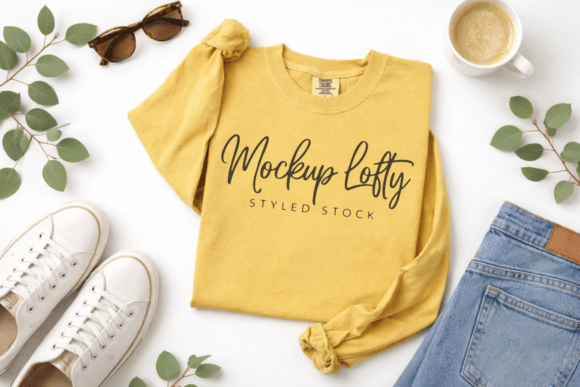
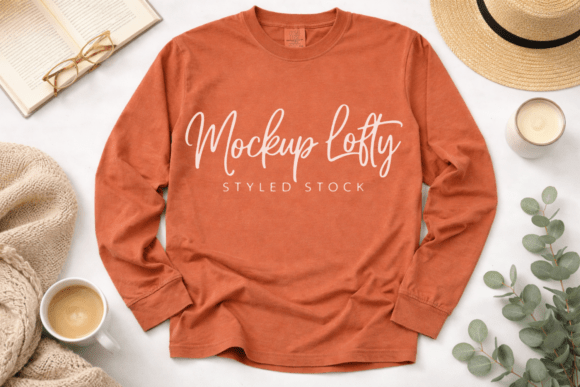
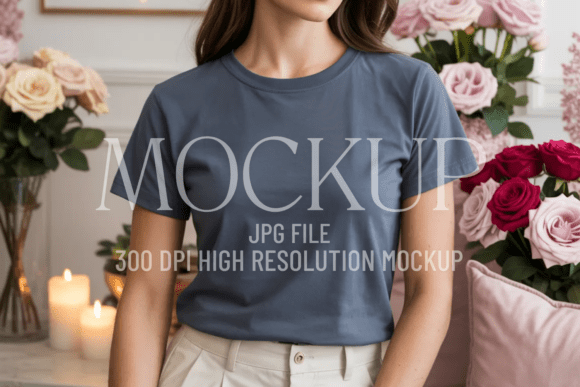
Realism in mockups isn’t achieved through aesthetics alone—it emerges from layered technical decisions. The Comfort Colors 1717 T-shirt Mockup,1717 leverages photorealistic lighting calibrated to simulate natural studio conditions. Shadows fall with accurate falloff, responding to the curvature of the chest, sleeve seam, and hemline—not as uniform gradients, but as nuanced transitions that reinforce three-dimensionality. Depth is reinforced through subtle background blur and strategic ambient occlusion near collar folds and underarm seams. These aren’t decorative flourishes; they’re perceptual cues our brains use to interpret physical presence. A design placed on this mockup doesn’t float—it settles, drapes, and interacts with light as it would on an actual garment.
This realism extends to material representation. The base t-shirt layer simulates the slight nap and matte finish of ring-spun cotton, avoiding the plastic sheen common in over-processed mockups. When you insert a sublimation-ready graphic or distressed retro print, the texture subtly interacts with the artwork—softening sharp edges just enough to reflect how ink absorbs into fabric fibers. That tactile honesty helps viewers intuit how the final printed piece will look and feel, reducing post-purchase uncertainty for buyers and minimizing revision cycles for designers.
Smart Object Integration: Where Efficiency Meets Precision
At the core of the Comfort Colors 1717 T-shirt Mockup’s usability is its fully editable smart object layer—packaged in the included PSD file. This isn’t a flattened template requiring manual masking or layer duplication. Instead, users simply double-click the smart layer, paste or drag their PNG, JPG, or vector-derived artwork into the embedded document, save, and return. The mockup instantly re-renders the design with correct perspective, scale, and lighting integration—no adjustment of blending modes, opacity sliders, or shadow masks required.
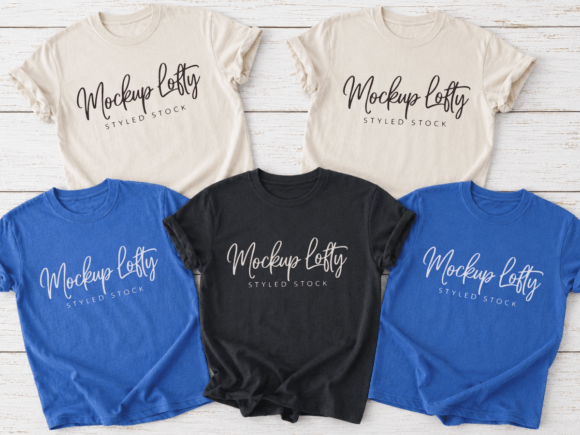
This workflow eliminates common pain points: misaligned centering, inconsistent sizing across variants, or washed-out colors due to improper layer blending. Because the smart object preserves your original artwork’s resolution and transparency, text remains razor-sharp, halftone patterns retain integrity, and intricate clipart retains fine detail—even at 300 DPI output. For Etsy sellers listing multiple colorways, this means swapping a single design across black, navy, heather gray, or olive mockups in under 90 seconds per variant. For educators demonstrating screen printing vs. direct-to-garment workflows, the same base file supports side-by-side comparisons without rebuilding layers from scratch.
Practical Applications Across Creative Roles
The versatility of the Comfort Colors 1717 T-shirt Mockup,1717 becomes evident when mapped against real-world use cases:
- Print-on-Demand (POD) Creators: Use it to generate high-converting product images for Redbubble, Teespring, or Printful storefronts. Its neutral background and clean framing comply with platform visual guidelines while emphasizing design clarity—critical when thumbnails appear alongside hundreds of competitors.
- Etsy Sellers: Bundle mockup previews with digital download listings (e.g., SVG cut files or quote-based designs) to demonstrate wearable context. Shoppers browsing “retro band tee designs” or “minimalist quote shirts” respond more strongly to visuals showing scale, placement, and fit than to isolated graphics.
- Graphic Designers & Agencies: Present concepts to apparel clients without committing to physical samples. Insert logo variations, test typography hierarchy on the chest versus back placement, or compare full-front prints against pocket-sized motifs—all within one consistent visual framework.
- Small Business Owners: Launch limited-edition merch for events, fundraisers, or brand campaigns using in-house design tools. No need to hire a photographer or rent studio time; maintain visual continuity across email banners, Instagram posts, and Shopify product pages with identical lighting and composition.
- Educators & Students: Teach textile design principles by analyzing how contrast, saturation, and negative space function on curved surfaces. The mockup serves as a low-risk sandbox for experimenting with layout rules before committing to physical production.
Technical Considerations for Optimal Output
While intuitive, maximizing the Comfort Colors 1717 T-shirt Mockup requires attention to technical nuance. First, resolution: the 300 DPI native output ensures print-ready quality for catalogs, packaging inserts, or large-format displays—but for web use (Shopify banners, Pinterest pins), exporting at 72–150 DPI maintains visual fidelity while reducing load times. Second, color management: work in sRGB for digital distribution; if preparing files for professional screen printing, convert your design layer to CMYK *before* embedding to preview potential gamut shifts.
Third, design placement discipline. Though the smart object auto-scales, intentional alignment improves professionalism. Center chest prints should sit 3–4 inches below the collar seam; full-front graphics benefit from 1-inch margins along sleeve and hem edges to avoid cutoff during manufacturing. The mockup’s inherent proportions make these spatial relationships visible—turning abstract guidelines into concrete visual anchors.
Why This Mockup Fits Evolving Creative Ecosystems
Today’s creative economy demands agility across platforms—from Creative Fabrica marketplaces to TikTok product reveals. The Comfort Colors 1717 T-shirt Mockup,1717 was built with cross-platform compatibility in mind. Its clean, uncluttered composition avoids distracting props or lifestyle clutter, ensuring designs remain the focal point whether viewed on a mobile feed, a desktop dashboard, or a printed wholesale catalog. The absence of watermarks or branding elements grants full commercial flexibility: sellers retain complete ownership of the final rendered image, aligning with Etsy’s policies and Shopify’s asset guidelines.
Moreover, its focus on a widely adopted blank (the Comfort Colors 1717) creates consistency across collaborative environments. A freelance designer handing off assets to a fulfillment partner knows the mockup reflects the exact garment being printed—reducing miscommunication about fit, neck depth, or sleeve length. For teams managing seasonal collections, maintaining a library of mockups based on the same base model allows rapid A/B testing of design language, typography families, or color palettes without relearning new interface logic.
Integrating the Mockup Into Sustainable Creative Practice
Beyond convenience, thoughtful mockup use supports sustainable creative habits. Physical sampling consumes fabric, ink, labor, and shipping resources—often for concepts that never launch. By validating design viability, scale, and visual impact digitally first, creators reduce waste and accelerate iteration. The Comfort Colors 1717 T-shirt Mockup enables rapid prototyping: test how a gradient fades across the shoulder seam, verify readability of small text at arm’s length, or assess contrast ratios for accessibility compliance—all before cutting a single yard of cloth.
For educators guiding students through design ethics, this tool also opens conversations about responsible production: How does visual accuracy influence consumer expectations? What responsibilities accompany presenting digital representations as proxies for physical goods? These questions gain grounding when explored using a mockup rooted in real garment specifications—not abstract silhouettes.
Final Thoughts on Contextual Fidelity
A mockup is only as valuable as the context it provides. Generic t-shirt templates may save time, but they risk misrepresenting scale, drape, or material interaction—leading to disappointed customers or redesign delays. The Comfort Colors 1717 T-shirt Mockup,1717 succeeds because it treats garment specificity as foundational, not incidental. It assumes users need more than a placeholder—they need a reliable visual translator between concept and reality. Whether you’re refining a sublimation pattern for performance wear, preparing a limited-run collection for a local boutique, or teaching color theory through textile applications, this mockup delivers consistent, credible, and controllable results. Its strength lies not in novelty, but in quiet precision: rendering the familiar garment with enough truth to earn trust—and enough simplicity to keep creation flowing.